
春季促销!最高立享 50% 折扣!
Last updated: · By: Adline Keth

If the air outside your apartment were tested the way silk bedding is, how many substances would show up? Pollen, exhaust particulate, dry office heat, the residue of a thousand stressed-out city days — it all settles somewhere, and far too often that somewhere is your pillow. At night, your skin deserves one clean break. That is the entire argument for OEKO-TEX certified silk sheets: a laboratory-backed guarantee that the fabric touching your face for eight hours carries no harmful chemical residues.
This guide unpacks what OEKO-TEX certified silk sheets actually promise, why the 23-momme weight and 6A grade matter as much as the safety label, and how to choose a certified mulberry silk set without falling for polyester 'satin' wording. By the end, you will know exactly what to check on a label, how to separate real silk from clever marketing, and why a certified 4-piece set from Promeed delivers the same 6A mulberry fiber as the boutique labels — at a price that fits a city budget rather than a luxury markup.
Quick answer: OEKO-TEX Standard 100 is the most widely recognized textile safety certification in the world. When a sheet set carries the label, an independent laboratory has tested the finished fabric for more than 100 substances known or suspected to harm human health: formaldehyde, heavy metals such as lead and cadmium, allergenic and carcinogenic dyes, pesticide residues, phthalates, and more. The testing is repeated annually, and the criteria are updated every year to reflect new scientific findings.
The standard sorts textiles into four product classes based on how much skin contact they involve. Bedding intended for adults falls into Class II, meaning it is tested for direct and prolonged skin contact. Products for babies and toddlers fall into the stricter Class I. This is why the certification matters so much for a natural fiber like silk: mulberry cultivation can involve agricultural treatments, and the degumming process that strips sericin from silk filaments can leave residues if done carelessly. A certified sheet confirms those potential residues have been tested and cleared.
One important clarification: OEKO-TEX certification is not the same as an organic label. Organic certification such as GOTS covers how the fiber was farmed, while OEKO-TEX Standard 100 covers the chemical safety of the finished product. They answer different questions. For city sleepers who simply want assurance that their sheets carry no harmful chemical load, OEKO-TEX certification is the practical baseline — and it is the one we build into every Promeed sheet. For a closer look at how this standard applies to our bedding, read our deeper guide to OEKO-TEX certified 23 momme silk sheets.
Here is the part most articles skip: an OEKO-TEX certificate tells you the sheet is safe. It does not tell you the sheet is good. A polyester microfiber can wear the same certificate and still trap heat, pill after a few washes, and feel synthetic against your skin. True quality in silk sheets is determined by three separate variables: the silk itself, the grade, and the weight.
First, the silk. Mulberry silk comes from the domesticated silkworm Bombyx mori, which is fed exclusively on mulberry leaves. That controlled diet produces remarkably uniform, long, smooth filaments — the reason mulberry silk is whiter, finer, and far more consistent than wild silk varieties. Second, the grade. Silk is classified from A to 6A based on fiber length, uniformity, and the presence of breaks or impurities; 6A is the highest classification, reserved for long-filament silk with minimal flaws. Third, the weight, measured in momme. One momme equals 4.340 grams per square meter, so a 19-momme sheet is noticeably lighter and thinner than a 23-momme sheet.
For sheets, 19 momme reads as delicate and wears quickly, while 30 momme is a hotel-grade heavyweight that some sleepers find too warm. The 23-momme grade we use sits in the proven sweet spot: dense enough to resist abrasion and last for years, light enough to drape beautifully and breathe. That is why our 23mm 6A+ Mulberry Silk Bedding collection is built on exactly this specification — 6A-grade fibers, 23-momme weight, and 100% mulberry silk with no blended fillers.
If you have ever ordered a 'silk' sheet online and received something slippery, static-prone, and heat-trapping, you already know the central problem: 'satin' describes a weave, not a fiber. Polyester, nylon, and rayon can all be woven into a satin structure and marketed with silk-adjacent language. These products are not silk, they do not behave like silk, and they do not deliver any of silk's skin and hair benefits — yet they dominate marketplace search results because they are inexpensive to produce.
The solution is to treat the product page like a contract. Genuine mulberry silk sheets state three things: the fiber content, the momme weight, and the grade. If a listing says '100% silk' without a momme number, ask what weight the fabric is. If it says 'satin' without saying 'mulberry silk,' assume polyester. A certification number that you can verify on the OEKO-TEX label-check tool adds a fourth layer of confidence. Price is also informative: real 23-momme mulberry silk has a material floor, and listings far below that floor are virtually always synthetic or silk blends.
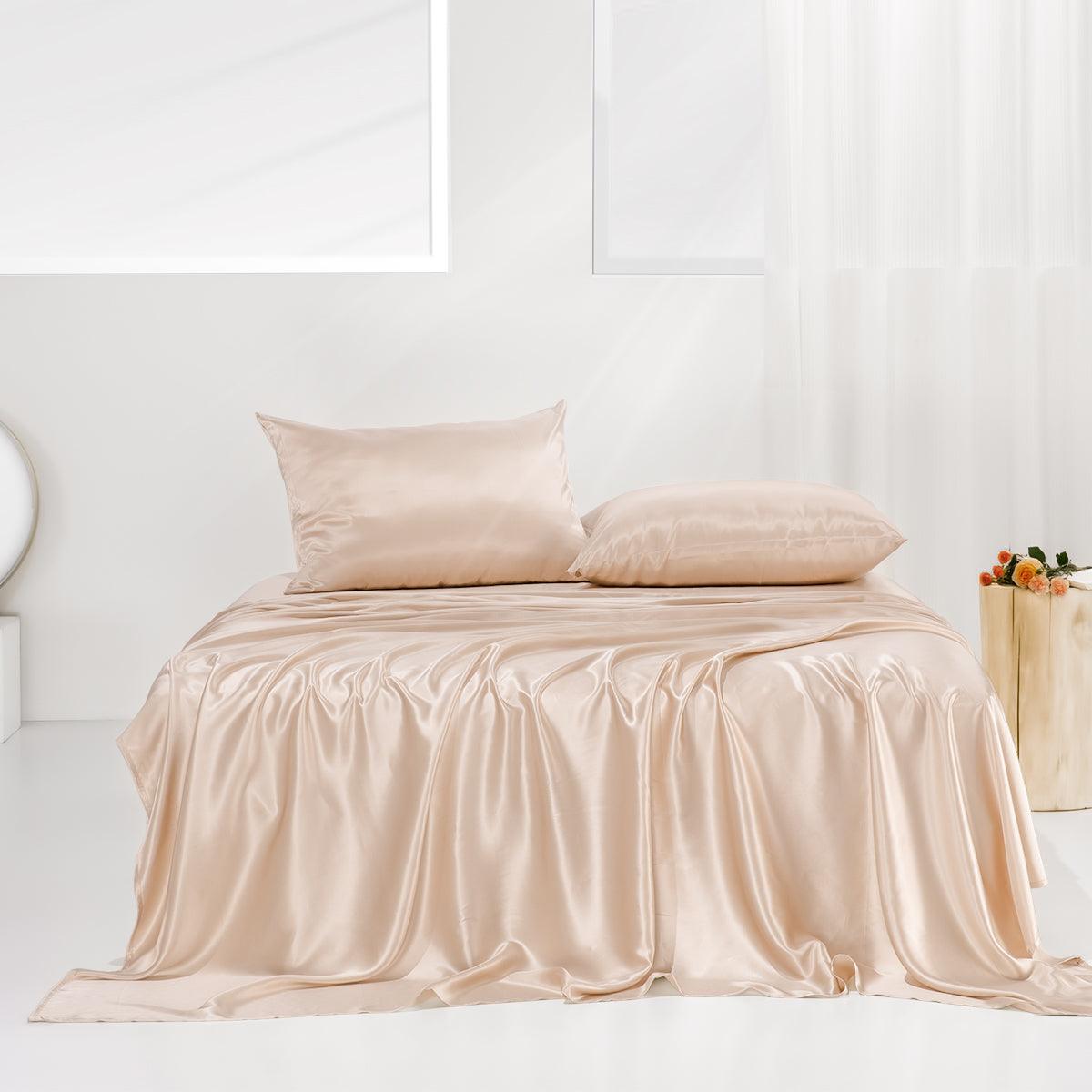
This is exactly the decision fatigue we built Promeed to remove. Our 23mm 6A+ 100% Mulberry Silk Flat Sheets Set states everything plainly — pure mulberry silk, 6A+ grade, 23-momme weight, and OEKO-TEX Standard 100 certification — so you never have to decode vague wording before bed. And unlike everyday satin, silk is naturally temperature-regulating, which matters when you live in a city that never really cools down at night.
City living is hard on skin. Pollution exposure, recycled air, late hours, and stress all show up on your face by morning. Now consider the surface you press your cheek into for eight hours: if it carries chemical residues or causes friction, it is working against everything your nighttime skincare routine is trying to do. Silk's structure is the fix. Its long, smooth filaments create a low-friction surface that glides against skin and hair, meaning fewer sleep creases on your face and dramatically less breakage and frizz in your hair compared with cotton.
Silk also absorbs less than cotton, so the serums and creams you apply at night stay on your skin instead of transferring to your pillowcase. As a natural protein fiber, silk contains amino acids that are compatible with human skin and hair, and its tight weave naturally resists dust mites — a meaningful advantage for anyone with allergies, eczema, or sensitive skin. For sleepers in overheated apartments, silk wicks moisture and regulates temperature as it breathes, keeping hot sleepers comfortable without synthetic cooling treatments. Results vary from person to person, but the mechanism — less friction, less residue, cleaner surface — is consistent.
The certification completes the picture: a clean, chemical-tested silk surface means your eight hours of skin contact happen on fabric that has been independently verified for safety. If you are curious about how strict the standard can be, our OEKO-TEX certified silk baby bedding guide explains the Class I testing that applies to infants — and hints at just how thorough a standard can be when skin contact is constant.
When you are ready to buy OEKO-TEX certified silk sheets, the practical checklist matters as much as the philosophy. Start with US sizing, because mattress dimensions vary by country. Our 4-piece set — one fitted sheet, one flat sheet, and two pillowcases — is available in the four standard US sizes, measured first in inches:
| US Size | Mattress Dimensions | Set Includes |
|---|---|---|
| Twin XL | 39 in × 80 in | Fitted + Flat + 2 Pillowcases |
| Queen | 60 in × 80 in | Fitted + Flat + 2 Pillowcases |
| King | 76 in × 80 in | Fitted + Flat + 2 Pillowcases |
| Cal King | 72 in × 84 in | Fitted + Flat + 2 Pillowcases |
Care is surprisingly simple for a luxury fabric, but a few habits protect the silk's protein structure. Machine wash on a cold, gentle cycle using a pH-neutral or silk-specific detergent. Skip bleach and fabric softener, both of which can break down silk fibers. Air dry when possible, or tumble dry on the lowest heat setting, and remove promptly to avoid wrinkles. If you iron, use the silk setting while the sheet is slightly damp. Store folded in a breathable bag away from direct sunlight, which can weaken silk over time.

Final checks before you purchase: confirm the certification logo and number, verify the fiber content reads 100% mulberry silk, and decide whether 23-momme or a heavier weight fits your climate. If you want the thickest option we make, the 30mm 6A+ Mulberry Silk Flat Sheets Set offers hotel-grade density for cooler bedrooms. Our primary recommendation for year-round city sleep remains the 23mm 6A+ 100% Mulberry Silk Flat Sheets Set — the balanced choice for durability, breathability, and skin comfort. And if you are shopping for a gift, the gift-ready silk sheet set turns the same certification story into a thoughtful present for a wedding, anniversary, or housewarming.
You already know the benchmark brands. They make beautiful silk bedding, and they charge for the name printed on the box. Our position is simpler: the value of silk bedding lives in the fiber, the grade, and the certification — not in the markup. When a 23-momme 6A+ mulberry silk sheet set from a boutique brand costs two or three times what ours does, the difference is not in the silk. It is in the distribution model, the flagship rent, and the influencer budget.
Run the cost-per-use calculation and the smart-luxury math becomes obvious. A 23-momme 6A+ silk sheet set, cared for properly, lasts five years or more. Divide the price by roughly 1,800 nights and the nightly cost works out to a few cents — far less than the morning skincare products it helps protect. For the modern city professional who values intelligent purchases over loud logos, that is the entire point of our 23mm 6A+ Mulberry Silk Bedding collection: certified safety, real silk performance, and a price that respects a monthly budget.
No. OEKO-TEX Standard 100 verifies the chemical safety of the finished fabric, not how the silk was farmed. Organic certification such as GOTS covers agricultural practices. They are complementary standards answering different questions.
Look for three stated details: fiber content ('100% mulberry silk'), a momme weight (such as 23 momme), and a grade (such as 6A). Genuine mulberry silk listings state all three because those are selling points; polyester satin listings avoid them.
Momme measures fabric density. Nineteen momme is light and delicate; 23 momme balances durability, drape, and breathability; 25 and 30 momme are progressively heavier, more luxurious, and warmer. For year-round sheets, 23-momme is our recommended standard.
Yes. Wash cold on a gentle cycle with a silk-specific or pH-neutral detergent, avoid bleach and fabric softener, and air dry or tumble on the lowest heat setting. This preserves the silk's protein fibers for years.
OEKO-TEX removes chemical-residue risks, which is the first half of the equation. The second half is the fabric itself: mulberry silk is naturally hypoallergenic and dust-mite resistant. If you have known fiber allergies, silk is generally well tolerated, but patch-test if you are unsure.
OEKO-TEX certified silk sheets answer one question — is this fabric safe against my skin? — and then it is up to you to answer the second: is it actually good silk? At Promeed, we answer both on the label: OEKO-TEX Standard 100 certification, 100% 6A+ mulberry silk, and a 23-momme weight that holds up for years. You get the skin-kind, temperature-regulating, hair-protecting surface your city nights deserve, without the brand tax. Ready to reset your sleep on a cleaner, calmer surface? Explore the 23mm 6A+ 100% Mulberry Silk Flat Sheets Set and bring a certified oasis into your bedroom tonight.
Sources:
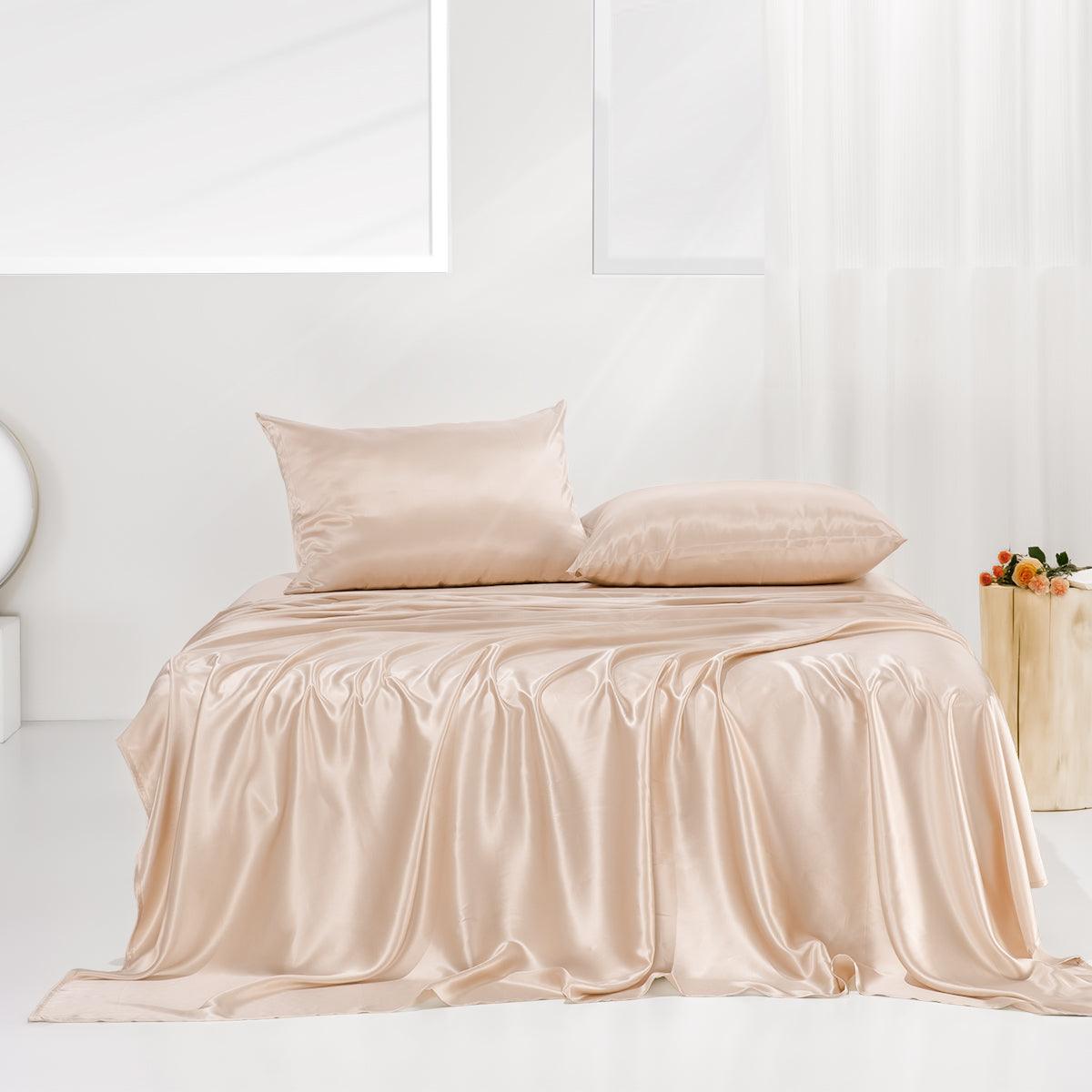
Are Silk Sheets Worth the Money? 23-Momme Value Guide
A detailed value breakdown of 23-momme 6A+ mulberry silk sheets: real cost-per-night, skin and hair benefits, temperature regulation, and how to avoid polyester satin.
阅读更多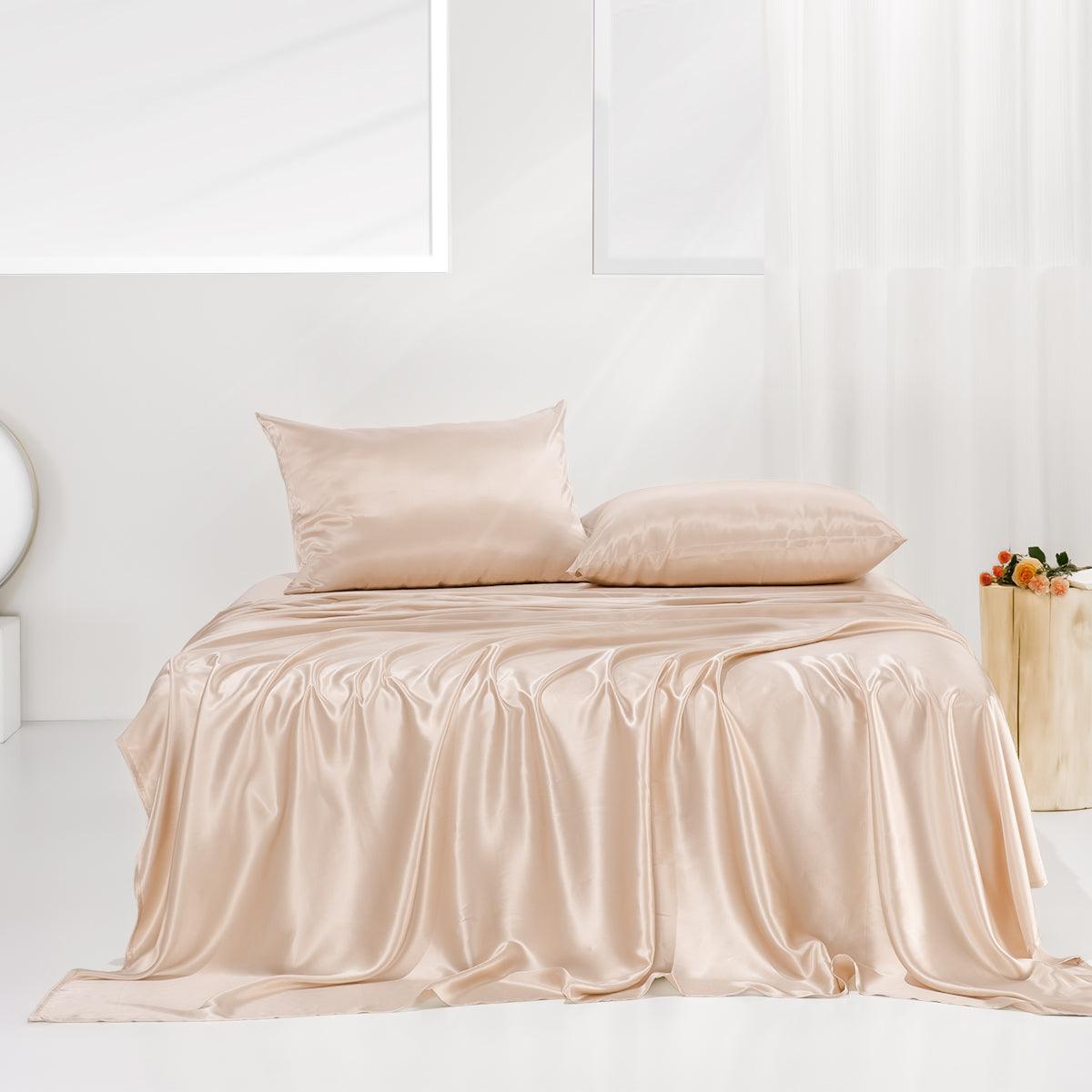
How to Tell If Silk Sheets Are Real: 8 Tests for Authentic Silk
A practical guide to checking whether silk sheets are actually mulberry silk, with eight at-home tests, label decoding, and why Promeed's 23-momme 6A+ set removes the guesswork.
阅读更多
发表评论
此站点受 hCaptcha 保护,并且 hCaptcha 隐私政策和服务条款适用。