
Spring Sale! Upto 50% Off!
Last updated: · By: Adline Keth


Quick answer: Real silk sheets pass three immediate checks: the label says 100% mulberry silk with a momme weight of 19 or higher—ideally 23 momme; the fabric smells like burnt hair, not plastic, in a burn test; and the weave shows a soft, irregular sheen rather than a glossy, static-charged shine. Promeed's 23-momme 6A+ mulberry silk sheets carry OEKO-TEX® certification and list their fiber content on the tag.
If you've ever searched for silk sheets online, you've seen the problem: dozens of listings claim 'silk' but show glossy, slippery fabric that feels more like a polyester slip than a natural fiber. Between pollution, stress, and constant noise, your bedroom should not add another thing to question. This guide gives you practical checks you can do at home before you buy.

This guide covers:
Silk is a fiber, not a weave. Satin is a weave, not a fiber. That single distinction is where most shopping mistakes begin. A satin weave can be made from polyester, nylon, rayon, or real silk—and all of them can be marketed with words like 'silky' or 'satin-soft.' Many lower-priced 'silk sheet sets' are actually 100% polyester satin with a wet-look finish that mimics silk's sheen for about two weeks of washing. Others are 'silk blends' that wrap a thin silk layer around a synthetic core, or rayon made from bamboo or eucalyptus that is not silk at all. The result is decision fatigue: you compare ten listings, all claiming the same thing, and none of them show the fiber content clearly. That's why our 23mm 6A+ Mulberry Silk Bedding collection uses one transparent standard: every piece lists 100% mulberry silk, momme weight, and grade on the tag.
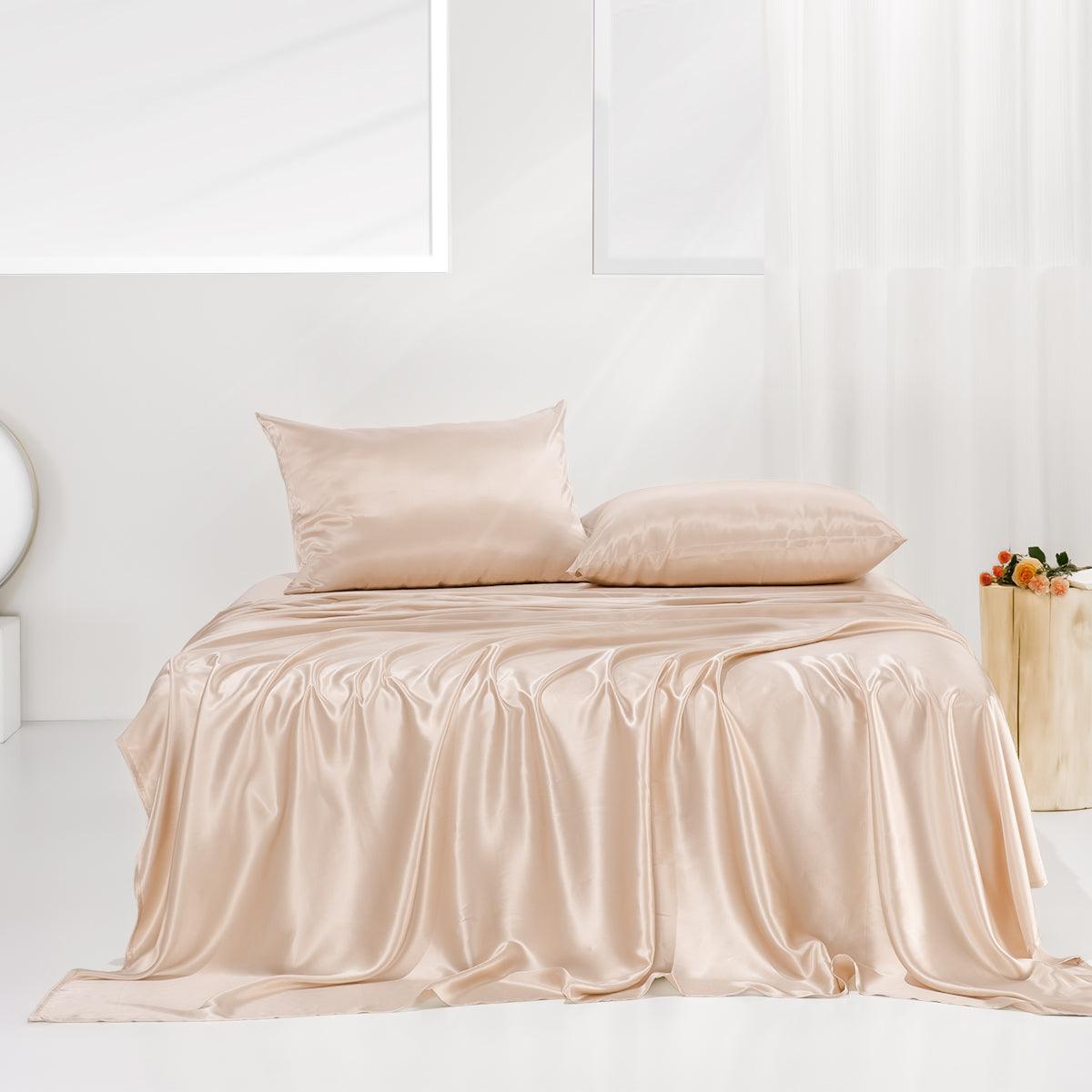
You do not need a lab to catch most fakes. The eight tests below cover physical, chemical, and labeling clues that separate authentic mulberry silk from polyester or rayon satin. Work through them in order, and by the end you will know exactly what to look for on the sheet in front of you—or in the product photos you are scrolling through. Our 23mm 6A+ 100% Mulberry Silk Flat Sheets Set 4pcs is the reference point used throughout.
Real silk is a protein fiber, like human hair, so it ignites slowly, curls away from the flame, and self-extinguishes when the flame is removed. It leaves a crushable black ash and smells like burnt hair or feathers. Polyester melts into a hard plastic bead and smells like burning plastic. To test safely: trim a few threads from an inside seam allowance, hold them with tweezers over a non-flammable surface, and touch a lighter to the end. Never apply flame directly to the sheet itself. If the sample melts, drips, or forms a hard residue, the fiber is synthetic—no matter what the package says.
Real silk warms almost instantly when pressed against your skin and feels smooth but not slick. Faux silk usually stays cool-to-cold, which is why it feels clammy in summer and static-prone in winter. Run your palm across the fabric: authentic silk should produce a gentle, natural warmth, not the glassy, static-charged slide of polyester. For a quick comparison, hold the sheet against the inside of your wrist for ten seconds. Real silk will feel like a second skin; polyester will feel like a plastic film.
Real silk reflects light at multiple angles, showing a soft, almost pearl-like luster. Tilt the sheet under a lamp: the surface should shift from bright to muted as you move. Polyester satin has a uniform, flat shine from every angle. If the shine looks like wet plastic or mirror finish, it is not silk. Our 23-momme 6A+ mulberry silk flat sheet has exactly the kind of gentle, dimensional luster you can check in natural daylight or under a warm bedside lamp.
Scrunch a corner of the sheet in your fist for five seconds, then release. Real silk will show fine wrinkles that relax within minutes or after a light steam. Polyester tends to spring back with fewer wrinkles because the fibers are elastic. A fabric that stays perfectly smooth after being crushed is suspicious. Note that real silk is not wrinkle-proof, but wrinkles should soften naturally, not require ironing to disappear.
Place one drop of water on the fabric. Real mulberry silk absorbs moisture slowly and the drop may spread slightly, because silk is hygroscopic. Synthetic satin often repels water, causing the drop to bead and roll off. If water sits on the surface like on a raincoat, the sheets are likely polyester. This same property is why real silk helps regulate temperature and wick away nighttime moisture instead of trapping it.
Gently rub the fabric between your thumb and forefinger. Real silk has a characteristically soft 'scroop' sound—a faint rustling crunch that comes from the fiber structure. Polyester satin is almost silent or makes a slick, squeaky noise. This test takes practice, but once you hear real silk, you never forget it. If you have ever handled a silk scarf, you already know the sound.
Use a seam ripper or small scissors to remove one thread from an internal seam allowance. Untwist it under a magnifying glass or phone macro lens. Real silk filaments are extremely fine, slightly irregular, and taper; man-made fibers look perfectly uniform and round. You should also see no synthetic core wrapped in silk—a common trick in 'silk blend' products. Genuine 100% mulberry silk will have long, continuous fibers, which is why higher momme weights like 23 momme feel denser and more durable.
Finally, read the care label and packaging. Authentic 100% mulberry silk should list a momme weight—ideally 22 or 23 momme—and a grade such as 6A. OEKO-TEX® Standard 100 certification indicates the fabric has been tested for harmful substances. If the label only says 'silk-like,' 'satin,' 'charmeuse feel,' or 'silk touch,' it is usually a polyester or rayon blend. Promeed's 23-momme 6A+ flat sheet set lists every detail on the tag, including certification and care instructions.

Numbers on a silk label are not decorative. Momme (pronounced 'mo-mee') is a Japanese unit of silk weight, roughly equivalent to 3.75 grams per square meter. A higher number means more silk fiber per area, which translates to density, drape, and durability. Here is the quick guide:
Grade is the second number. Mulberry silk is graded from A to 6A+, with 6A+ representing the longest, finest, most uniform filaments from the innermost cocoon layers. Lower grades use shorter or broken fibers and tend to pill faster. When a brand hides the grade, assume it is not 6A. Certification adds the final layer: OEKO-TEX® Standard 100 verifies that the fabric has been tested against a list of harmful substances, which matters when the fabric touches your face and body for eight hours a night.
Even before you run a burn test, some listings disqualify themselves. Watch for these red flags:
If you want a more condensed checklist version, our earlier article How to Tell If Silk Sheets Are Real: 7 Smart Tests covers the core checks in quick-reference format. This guide goes deeper into the why behind each test so you can spot fakes before you buy.
We created Promeed for the city dweller who refuses to pay a brand tax for quiet luxury. You should not need a textile degree to buy real silk sheets. Here is how our approach maps to the problems that actually matter:
The result is bedding that meets real-silk standards on every test, without the guessing game—exactly what the urban oasis deserves.
Yes, when they come from a direct-to-consumer brand. Real mulberry silk is not inexpensive to produce, but you do not need to pay a high markup for a logo. What matters is that the label shows 100% mulberry silk, a momme weight of 22 or 23, and a 6A grade. Promeed built its pricing model to remove the brand tax, not the quality.
No. Polyester 'silk' listings sometimes invent high numbers because the number itself is meaningless without fiber content. Always verify that the product says 100% mulberry silk and run the burn or sheen test on arrival. A fake 30-momme polyester sheet is still polyester.
Hand wash or use a gentle machine cycle with cold water and a pH-neutral detergent. Air dry away from direct sunlight, and avoid bleach or fabric softener. With proper care, 23-momme 6A+ mulberry silk can last for years, making it a longer-term bedding investment.
You now have eight tests, a label decoder, and a list of red flags that most online sellers hope you never learn. Real silk sheets pass the burn test, feel warm to the touch, show multi-angle luster, absorb water, and carry a transparent label that says 100% mulberry silk, 23 momme, and 6A+. Promeed's 23mm 6A+ 100% Mulberry Silk Flat Sheets Set 4pcs meets every one of those criteria, with OEKO-TEX® certification and transparent labeling. Bring the verification home, run the tests on arrival, and sleep with the certainty that your sanctuary is real.
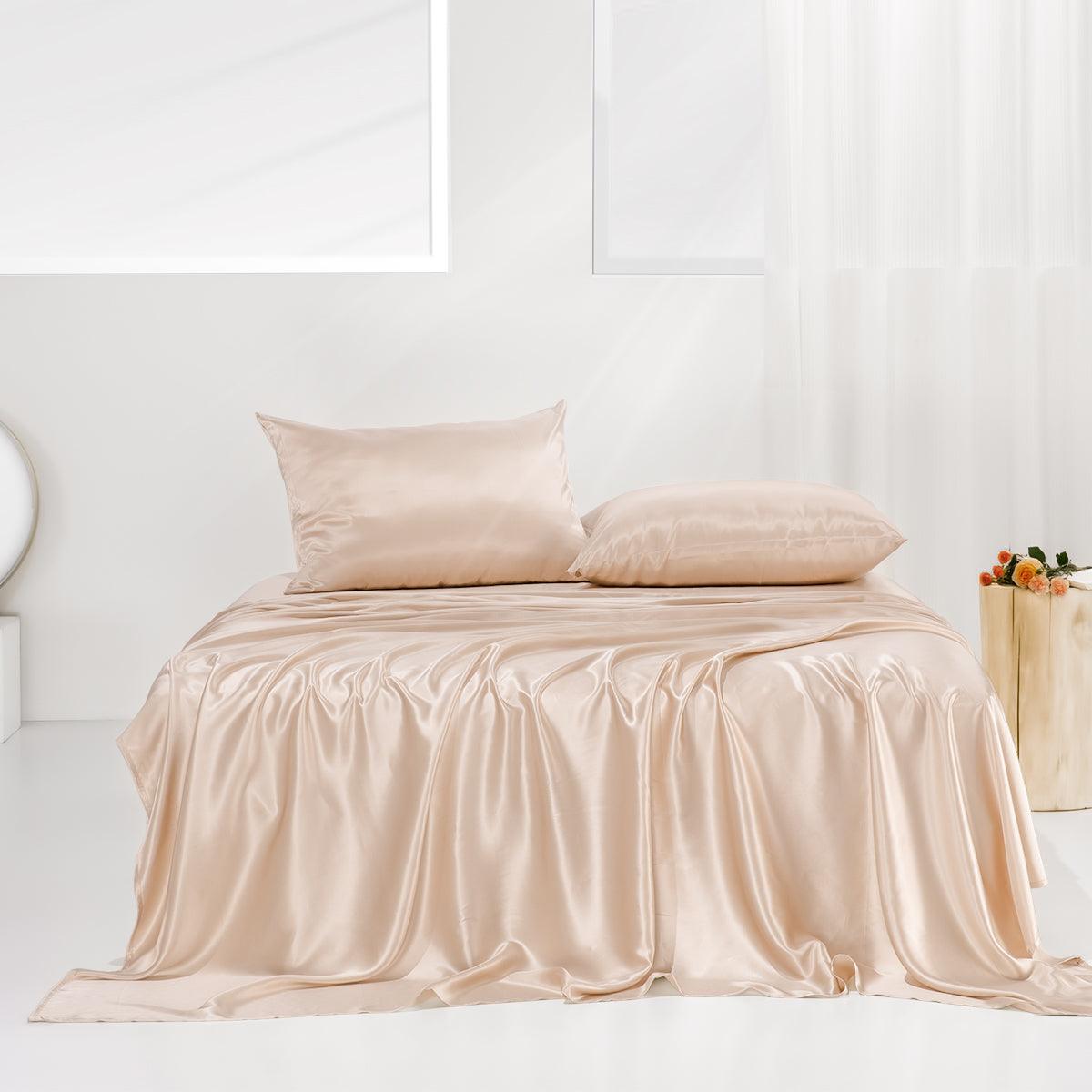
OEKO-TEX Certified Silk Sheets: The 23-Momme Standard
OEKO-TEX certified silk sheets explained: what the label actually verifies, why 23-momme 6A+ mulberry silk matters for skin and sleep, and how to choose a safe, luxurious 4-piece set without overpa...
Leer más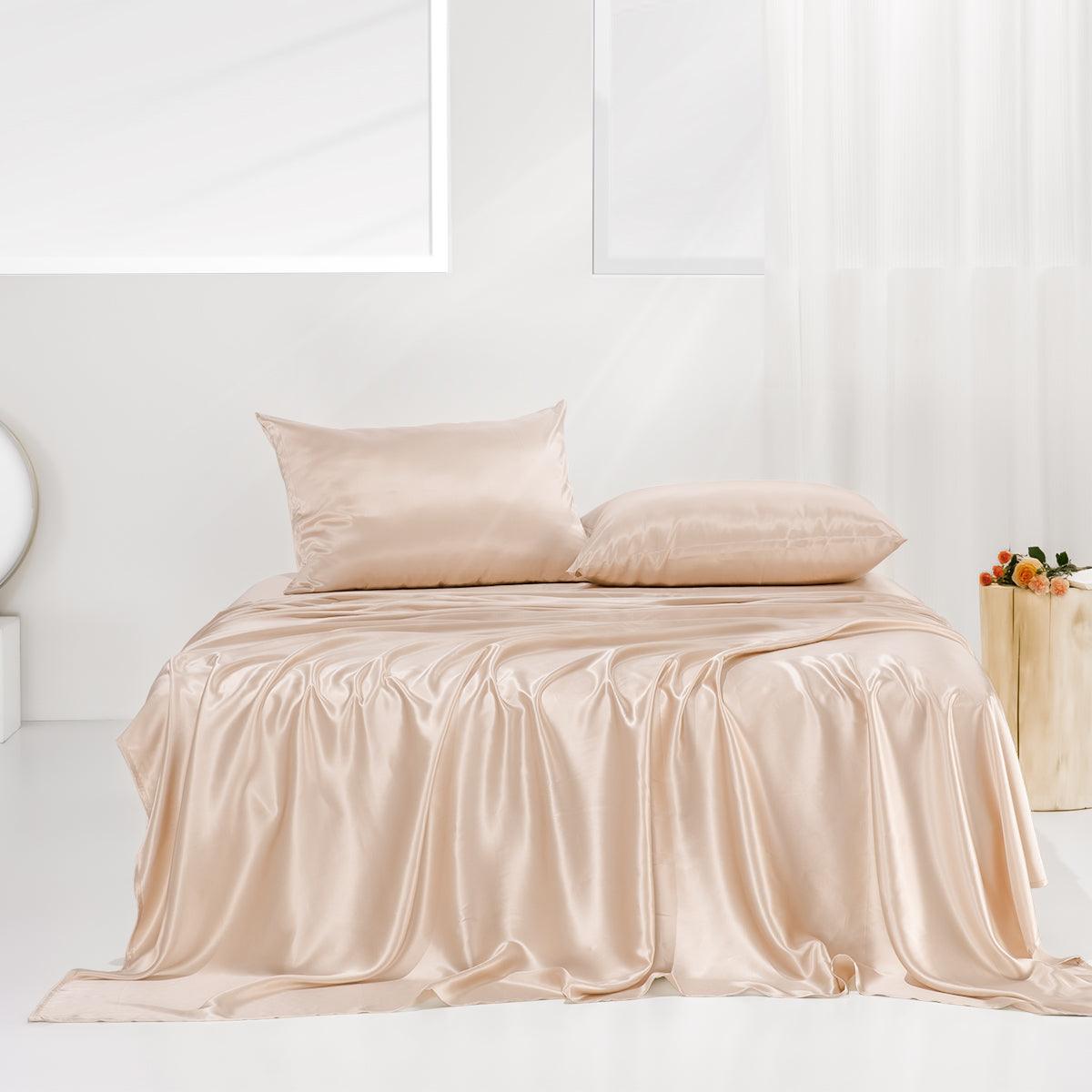
Affordable Real Silk Sheets Reviews: Honest 23-Momme 6A Guide
An honest, technical review of what affordable real silk actually costs: 23-momme 6A+ mulberry silk vs. satin-look fakes and designer markups, plus a five-point authenticity checklist before you buy.
Leer más
Dejar un comentario
Este sitio está protegido por hCaptcha y se aplican la Política de privacidad de hCaptcha y los Términos del servicio.