
Spring Sale! Upto 50% Off!
Artículo: Is OEKO-TEX Certified Mandatory for Pure Silk Sheets? Not Quite
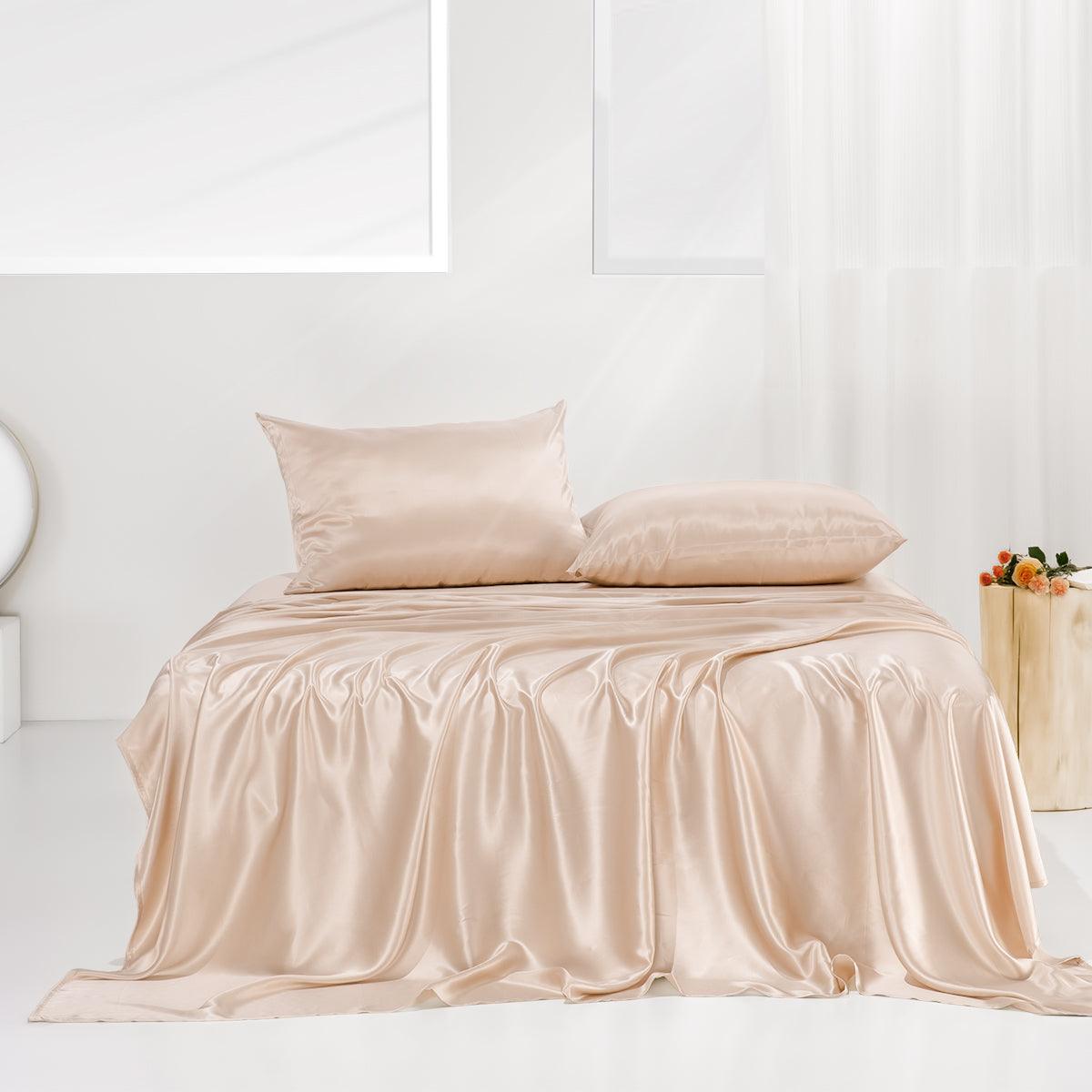
Last updated: · By: Austin Cole
If you live in a major city, your skin already works overtime: exhaust particles, dry HVAC air, and a constant low-grade stress load that shows up as dullness and fine lines. The last thing you need is a bedding upgrade that quietly reintroduces chemical residues while you sleep. That is why the question — is OEKO-TEX certified mandatory for pure silk sheets? — deserves a direct answer before you spend. The short version: certification is not legally required anywhere for silk sheets. But how a brand approaches that certification tells you whether you are buying pure, safe fabric — or a silk label with an asterisk. Here is how to read the signal correctly.
Short answer: No, OEKO-TEX certification is not legally mandatory for pure silk sheets in the US, UK, EU, or any major market. It is a voluntary, independent testing standard. However, for silk specifically — a fiber that passes through degumming, dyeing, and finishing stages where chemicals are routine — certification is a dependable proof that your sheets fall within strict safety limits for substances like formaldehyde, heavy metals, and allergenic dyes. Every Promeed 23-momme 6A mulberry silk flat sheet set carries OEKO-TEX Standard 100 certification, because the words 100% silk alone tell you nothing about chemical safety.

In this guide:
OEKO-TEX Standard 100 is a widely recognized textile safety certification. It is issued by independent institutes and test laboratories, not by the brands that sell the product — which is exactly why it carries weight. A certified item has been tested against a list of more than 100 regulated substances, including formaldehyde, heavy metals such as lead and cadmium, chlorinated phenols, phthalates, allergenic dyestuffs, and pesticide residues. For bedding, the standard applies its strictest product class limits because the textile sits in direct, prolonged contact with your skin and often with your face.
The key word here is voluntary. There is no government agency in the US, the UK, or the EU that requires a silk sheet set to carry this label before it can be sold. A silk sheet can legally reach your door with zero independent safety testing. That gap is part of why the question keeps coming up in bedding research. For more detail on how the standard maps to silk specifically, see our explainer on OEKO-TEX certified silk sheets and the 23-momme standard.
The words 100% mulberry silk tell you about the fiber, not the processing. Mulberry silk means the cocoons come from Bombyx mori silkworms fed exclusively on mulberry leaves — a marker of fiber quality and filament length that many buyers prize for bedding. But between the cocoon and your fitted sheet, the silk passes through several industrial stages: boiling or steaming to loosen sericin, the natural gum; degumming with alkaline baths; bleaching for a uniform white base; and dyeing, often with acid dyes that require chemical mordants to bind color to the protein fiber. Each of those stages can introduce substances that linger unless the finished product is washed and tested rigorously.
This is the gap a certification exists to close. A sheet can be genuinely 100% mulberry silk and still carry dye residues, heavy metal traces, or finishing agents potentially above levels considered safe for skin. You cannot tell by touch, sheen, or even by the price tag. The OEKO-TEX label is the check that happens at the end of that chain, on the finished item, not on the raw fiber. That distinction matters if you are buying silk for skin and hair health rather than just for a luxe look. Read our full walkthrough of how certified 23-momme silk stays pure and safe through processing.
For the urban-oasis buyer, this is not an abstract compliance question. City skin deals with particulate pollution, hard water, and a stressed-out skin barrier that is already more reactive than it used to be. Laying your face on a pillowcase for seven to eight hours every night is effectively a topical exposure. If a sheet carries formaldehyde from an aggressive finish or an unbound dye that transfers onto damp skin, that exposure can potentially contribute to irritation, congestion, or flare-ups in some people — the opposite of the skinimalist effect you bought silk for.
OEKO-TEX Standard 100 limits are set far below the threshold where these substances cause harm, and the test covers the finished product in the condition you receive it. In practice, certified silk bedding gives you three specific reassurances: strict limits on allergenic dyes in the parts of the set that contact your face, heavy metal residues from pigment dyeing, and pesticide carryover from raw silk farming. Silk is often described as naturally dust-mite resistant and hypoallergenic; certification helps ensure the processing does not undo that natural advantage. That is why we pair OEKO-TEX testing with our 23-momme 6A mulberry silk flat sheet set — the certification covers the finished set, not just the raw fiber claim.
OEKO-TEX is a well-known name, which means some sellers borrow its credibility without doing the testing. A vague phrase like “OEKO-TEX inspired” or “meets OEKO-TEX standards” is not a certification — it is marketing copy. The good news is that genuine claims are easy to verify, and it takes less than a minute.
If a seller hesitates at step two, treat that as useful information. Reputable silk bedding brands treat certification as a selling point, not a secret. Our guide to certified 23-momme silk sheets walks through what those certificate details look like in practice, so you can compare listings with confidence.
Certification tells you the sheet is safe. Momme tells you it is worth buying. Momme (pronounced moe-mee) is the standard unit for silk weight: the weight in pounds of a piece of silk measuring 45 inches by 100 yards. More momme means more silk per square inch — a denser weave that feels smoother, drapes with more presence, and resists tearing, pilling, and wear-through over years of nightly use. For bedding that touches your face, hair, and body every night, weight often plays a role in how well the fabric holds up over time.
Entry-level silk bedding often sits around 19 momme. That is the weight you will see on budget sets, and it is thin enough that snags and pillowcase blowouts are more likely. Twenty-two momme is often considered the luxury floor for bedding. We standardize on 23 momme — a deliberately heavyweight spec at 6A grade, a high-quality classification for mulberry silk — because it delivers the density that makes silk both durable and visibly different from a distance.
| Momme | Typical use | What you notice |
|---|---|---|
| 19 momme | Entry-level solid silk, often mass-market | Lightweight, more prone to snags and thinning |
| 22 momme | Standard luxury floor for bedding | Smoother drape, moderate longevity |
| 23 momme (our standard) | Heavyweight 6A-grade bedding | Denser weave, longer lifespan, more presence |
When you pair OEKO-TEX certification with 23-momme 6A silk, you have covered the two failure modes most buyers worry about: chemical unknowns and physical longevity. Browse the full 23mm 6A mulberry silk bedding collection to see the weight and certification together.
We built our silk sheet line around the two signals this article has focused on: independent safety testing and material weight you can verify. Each 23mm 6A+ 100% mulberry silk flat sheets set comes as a four-piece set — one fitted sheet, one flat sheet, and two pillowcases — in US sizes from Twin XL through California King. The silk is 6A+ grade mulberry, which reflects long, uniform filaments, and is woven at a 23-momme weight. Every set is OEKO-TEX Standard 100 certified, with the certificate number available on request and verifiable in the label check database.

That combination removes two layers of guesswork at once. You do not need to decode thread count, a meaningless metric for silk. You do not need to wonder whether a satin listing is actually polyester pretending to be silk. And you do not need to gamble on whether a dye batch was clean. If you prefer an even heavier, hotel-weight option, our 30mm 6A+ mulberry silk flat sheets set carries the same certification. Either way, you are buying a finished product that has been tested, not just a story about the fiber.
Is OEKO-TEX certified mandatory for pure silk sheets? No — no regulation forces it, and that is precisely why it is a useful filter rather than an empty badge. A seller who invests in testing is signaling that their product is meant for close, nightly, skin-contact use, not just for a product photo. For city buyers who already filter their water, audit their skincare labels, and distrust vague natural claims, that distinction is the line between a smart-luxury purchase and a risk you did not need to take.
Our advice is simple: consider skipping the uncertified entry-level silk, inspect the certificate number when a claim looks too convenient, and pick a weight that matches how long you expect the sheets to last. At Promeed, we standardize on OEKO-TEX Standard 100 certified, 23-momme 6A mulberry silk across our flat sheet sets so that the safety and the durability questions are answered before your package arrives. Shop the 23mm silk bedding collection and build the sanctuary your city routine has been asking for.
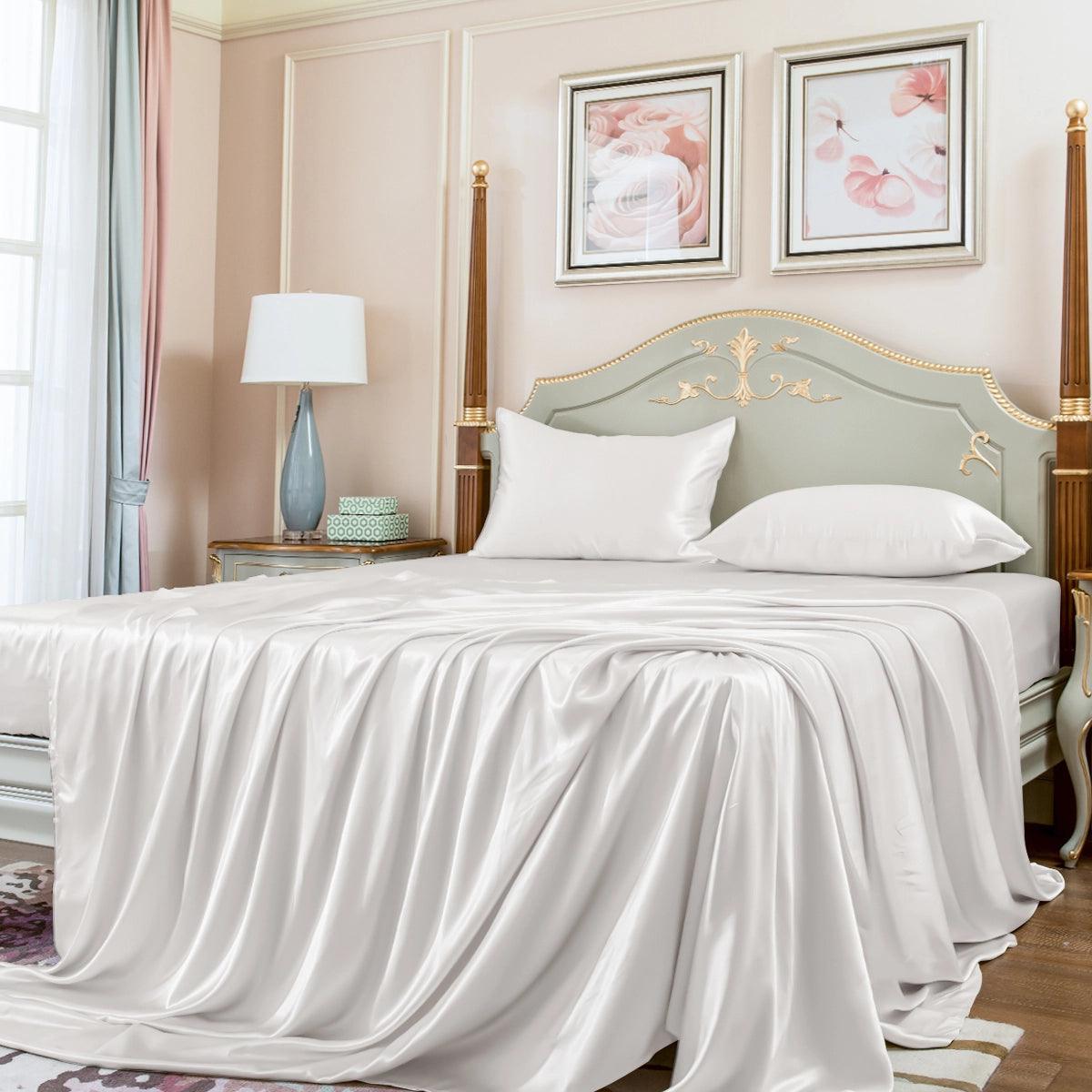
What Momme Is Best for Silk Sheets? The 23-Momme Sweet Spot
Not every momme weight is right for bed sheets. Why 23-momme 6A+ mulberry silk offers the best balance of smoothness, durability, and value—and how to choose your first Promeed set.
Leer más
Dejar un comentario
Este sitio está protegido por hCaptcha y se aplican la Política de privacidad de hCaptcha y los Términos del servicio.