
Spring Sale! Upto 50% Off!
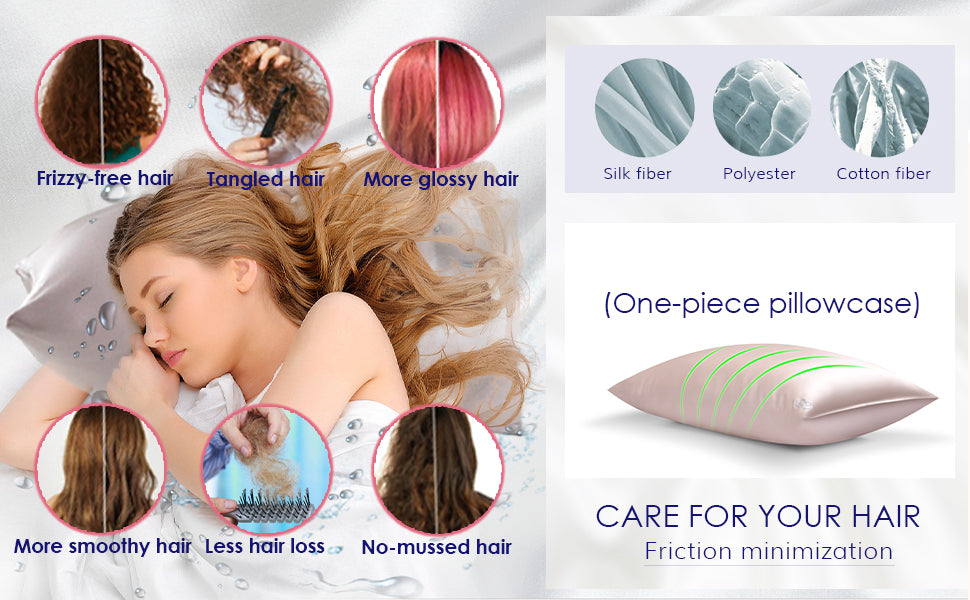
Does a $90 silk pillowcase really transform your hair and skin, or is it just a luxury indulgence? We tested it for 49 days to find out.
Last updated: · By: Kelly Eleanor
Continue exploring Analysis of Silk Pillowcase Efficacy: A Seven-Week Case Study with these related Promeed resources: mulberry silk pillowcase; 23mm 6A+ Mulberry Silk Pillowcases; THXSILK VS. Promeed Silk Pillowcase Reviews.
Before assuming a higher price means a better pillowcase, compare what the price is actually tied to: silk density, construction, care requirements, policies, and brand visibility.
Use the Blissy and Promeed sections below as a side-by-side decision path, so the reader can decide whether the premium is justified for their sleep, hair, and skin priorities.
If you've ever wondered whether swapping your cotton pillowcase for a silk one is worth the investment, you're not alone. The beauty and wellness world is full of claims that silk reduces friction, prevents moisture loss, and helps maintain youthful skin and frizz-free hair. But how much of that is backed by real-world experience? At Promeed, we believe in transparency, so we conducted a seven-week longitudinal trial using our 100% Mulberry Silk Cushion Pillow Case (23-momme grade) to see what actually happens.
This article breaks down the methodology, results, and practical takeaways so you can decide if silk pillowcases are right for you. We'll cover everything from hair manageability and skin hydration to cost-per-use and complementary routines.

The trial was conducted over a 49-day period to determine if the high cost of premium silk pillowcases correlates with observable benefits for curly hair and reactive skin. The subject—a 32-year-old professional with naturally curly, frizz-prone hair and dry, blotchy skin—used two Promeed 23-momme mulberry silk pillowcases exclusively for seven weeks.

The study highlights a significant barrier to entry regarding "proper" silk products and notes the presence of deceptive marketing in the textile industry. Many products labeled "silk" are actually satin or low-grade silk blends. At Promeed, we ensure every pillowcase is 100% mulberry silk, 23-momme grade, with a zipper closure for easy care.
| Metric | Detail |
|---|---|
| Retail Price | $90.00 USD per pillowcase |
| Purchase Price | $45.00 USD (Half-price promotion) |
| Total Investment | $90.00 USD for two units |
| Market Risk | Identification of "schemes" where satin or "average" silk is marketed as high-quality silk. |
The trial notes that the perceived value of the experiment was heavily influenced by the purchase price. At the full retail price of $180.00 for two pillowcases, the minor results would likely lead to consumer dissatisfaction. However, when considering cost-per-use over a year, a quality silk pillowcase can be a worthwhile investment for those who prioritize sleep quality and self-care.
Initially, the trial aimed for weekly check-ins, but these were abandoned mid-study because the visible changes between Week 0 and Week 3 were negligible.
The theory that silk prevents moisture loss was tested against the subject's tendency toward localized dryness and redness.
From a scientific standpoint, the differences observed over seven weeks were not considered statistically significant. The subject acknowledged that the minor improvements could simply be "natural variation," as hair and skin quality fluctuate independently of environmental factors.
The study posits that a silk pillowcase may not be a "miraculous" standalone solution. Instead, it should be viewed as a single component of a larger system. Potential complementary actions include:
While results are subtle, silk pillowcases offer a luxury feel and may complement a broader skincare routine. For those who value sleep quality and self-care, the cost-per-use over a year can be reasonable.
Hand wash or machine wash on delicate cycle with cold water and mild detergent. Avoid bleach and fabric softener. Air dry away from direct sunlight.
Ready to experience the difference for yourself? Explore our Mulberry Silk Pillowcases collection and find your perfect match.
Promeed readers are usually comparing comfort, material quality, care effort, and long-term value before choosing silk bedding. Use this guide as a practical decision path: match the fabric to your sleep priorities, then check whether the care routine fits your household.
For shoppers leaning toward mulberry silk, focus on smooth hand feel, momme weight, gentle washing, and daily friction against hair and skin. Those details keep the article grounded in Promeed's silk bedding expertise without turning the comparison into a generic fabric overview.
When the fit feels clear, use the next step below to review the most relevant Promeed option.
See the recommended 100% Mulberry Silk Cushion Pillow Case
A useful durability comparison should separate the material itself from the way the fabric is made. Fiber length, yarn quality, weave, finishing, washing habits, and how often the item is used all change the result. That is why two products made from the same material can age very differently in a real bedroom. When comparing linen, silk, and cotton, treat lifespan as a practical range rather than a single promise.
Linen usually wins on raw abrasion resistance because flax fibers are naturally long and strong. Its crisp hand can feel less smooth at first, but the fabric often becomes softer with repeated washing. The trade-off is that linen wrinkles easily and may not give the polished, glossy look some sleepers want. For shoppers who prioritize many years of everyday use and do not mind a relaxed texture, linen is often the most durable choice.
Silk needs a different standard. A high-momme mulberry silk fabric can be long lasting, but it rewards gentle care more than rough handling. Its smooth surface reduces friction against hair and skin, which is one reason people choose it for pillowcases and bedding accessories. The same smoothness can make snags, harsh detergents, or high heat more noticeable. Choose silk when the goal is a balance of comfort, low friction, temperature feel, and a luxury surface, then protect that surface with careful washing.
Cotton has the widest quality range. Long-staple cotton and a balanced percale or sateen weave can perform well, while short-staple cotton may pill, thin, or lose smoothness sooner. Thread count alone does not prove durability because very high numbers can come from finer or multi-ply yarns. A better buying check is to look at staple length, weave type, fabric weight, and care instructions together. Cotton is often the easiest material to wash, but it is not automatically the longest lasting.
Care routine is where many durability differences appear. Wash with a suitable detergent, avoid bleach unless the care label clearly allows it, and reduce high-heat drying when possible. Rotating pillowcases and sheets gives fibers time to rest between uses, while overloading the washer increases friction. For silk, a mesh laundry bag and air drying are especially helpful. For linen and cotton, prompt drying and proper storage can reduce deep creasing, mildew risk, and unnecessary fiber stress.
The Thread Count Myth and 4 Other Secrets to Buying Bed Sheets Like a Pro
The luxury bedding market is rife with expensive disappointments, where consumers often find that a several-hundred-dollar investment yields sheets that feel scratchy, stuffy, or clinical. We are c...
Weiterlesen
Sleep Optimization with Mulberry Silk: 3D Eye Masks for Eye Strain Relief
Tired of waking up with tired eyes? Discover how a 3D mulberry silk eye mask can relieve eye strain and transform your sleep quality. Last updated: April 27, 2026 · By: EleanorKelly →Related read...
Weiterlesen
Hinterlasse einen Kommentar
Diese Website ist durch hCaptcha geschützt und es gelten die allgemeinen Geschäftsbedingungen und Datenschutzbestimmungen von hCaptcha.